

July 8, 2026
•
5 MIN READ
Trying a new skincare product when you have rosacea can feel stressful. Even products labelled “gentle” or “for sensitive skin” can sometimes leave skin feeling hot, tight, or irritated.
The good news is that introducing new skincare slowly and thoughtfully can make a big difference. A simple approach helps you understand what your skin likes, while reducing the risk of overwhelming already reactive skin.
If you have rosacea-prone skin, introduce one new skincare product at a time and avoid testing new products during an active flare-up if possible. Patch testing first, keeping your routine simple, and giving your skin 1–2 weeks before adding another product can help reduce the risk of irritation.
Rosacea-prone skin is often linked with a compromised skin barrier. When the barrier is weakened, skin may lose moisture more easily and become more reactive to ingredients, temperature changes, or over-cleansing.
This doesn’t necessarily mean your skin will react to everything, but it does mean introducing new products carefully is usually the best approach.
If you’d like to understand more about how the skin barrier works, you may find my blog on repairing a damaged skin barrier helpful.
One mistake I see often is people trying several new products at once, especially when they’re desperately trying to calm irritated skin. Unfortunately, this can make it difficult to work out what’s helping and what may be causing further irritation.
If your rosacea is already flaring, your skin is often more reactive than usual. Introducing new skincare during this time can make it harder to tell whether the product suits your skin or whether the flare itself is worsening.
Whenever possible, it’s usually better to wait until your skin feels a little calmer before testing something new.
During flare-ups, focusing on a simple, consistent routine is often the gentlest approach.
If you’re introducing something new into your routine, try to keep the rest of your skincare consistent.
Adding one product at a time allows you to properly observe how your skin responds. If irritation does happen, it’s much easier to identify the cause.
As a general guide, give your skin around 1–2 weeks before introducing another product. If your skin is particularly reactive, you may even prefer to wait longer.
Patience can feel frustrating, but slower changes are often much kinder to rosacea-prone skin.
Patch testing won’t guarantee you won’t react, but it can help reduce the chances of applying an irritating product all over your face.
A simple way to patch test is to:
If everything feels comfortable, you can then slowly begin using the product on a larger area of the face.
With rosacea-prone skin, less is often more at the beginning. You don’t need to immediately use a new product twice daily.
When you’re nervous about irritation, it can be tempting to judge a product immediately after the first use. But with rosacea-prone skin, consistency and patience are often important.
Some products may initially feel unfamiliar simply because your skin barrier is already stressed or dehydrated. This is why introducing products slowly and giving your skin time to settle can be helpful.
Of course, persistent burning, itching, or worsening irritation are signs to stop using a product. But mild dryness or temporary sensitivity doesn’t always mean a product is automatically unsuitable.
Keeping a routine simple and consistent often makes it easier to understand what genuinely helps your skin over time.

Sometimes irritation isn’t immediately obvious visually. A product might not cause visible redness straight away, but your skin may start to feel:
These early signs can be useful clues that your skin barrier may not be entirely happy.
Trusting how your skin feels is just as important as what you see in the mirror.
When skin feels reactive, it’s tempting to keep adding more products in the hope that something will work. But for many people with rosacea, a simpler routine is often far more supportive.
A gentle, non-stripping cleanser can often help skin feel more comfortable over time, especially if your skin feels reactive or overwhelmed.
Many people with rosacea-prone skin also enjoy using a nourishing face oil as part of a simple evening routine, particularly when skin feels dry or tight.
I’ve had many customers tell me their skin became calmer once they stopped constantly switching products and focused instead on consistency and gentle daily care.
If you’re struggling with reactive skin, you may also find my blog on creating a calming skincare routine for sensitive or reactive skin helpful.
Introducing new skincare when you have rosacea doesn’t need to feel overwhelming. Going slowly, keeping your routine simple, and paying attention to how your skin responds can help you build a routine that feels supportive rather than stressful.
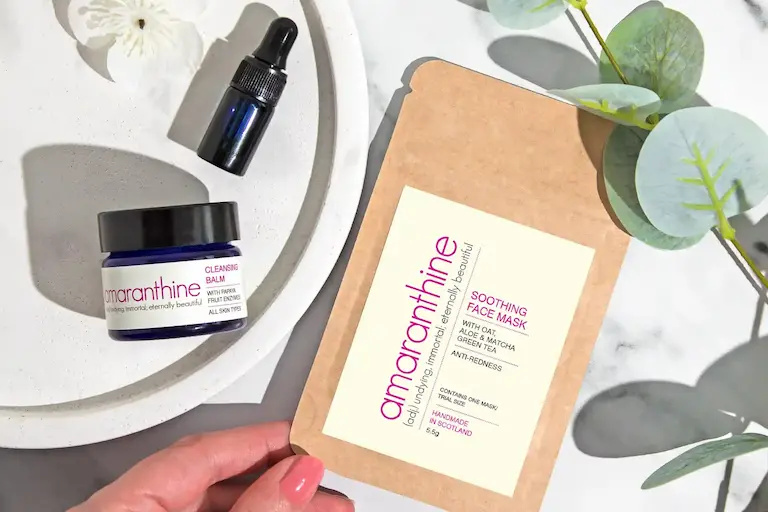
If you feel nervous about trying new skincare, starting with smaller sizes can sometimes feel less overwhelming too. My rosacea skincare minis set was created as a gentle way to try a simple routine without committing to full sizes straight away.
Face oils for rosacea-prone skin
Choosing a cleanser for rosacea
Rosacea triggers: common causes of flare-ups and how to manage them
Skin barrier in rosacea – read the study here
Epidermal skin barrier and skin care in rosacea: a narrative review – read the review here


Sarah is the founder of certified palm oil free natural skincare brand Amaranthine. She is a qualified organic skincare formulator and has diplomas in Beauty Therapy and Clinical Aromatherapy.


