

May 4, 2026
•
4 MIN READ
If your skin often feels unpredictable, one day calm, the next irritated, it can make skincare feel more stressful than soothing.
Sensitive or reactive skin doesn’t need a complicated routine. In fact, the more you add, the harder it can be for your skin to stay balanced.
A calming skincare routine is about doing less, but doing it well. It’s about choosing gentle, supportive products, giving your skin space to settle, and creating a ritual that feels reassuring rather than overwhelming.
A calming skincare routine for sensitive or reactive skin should be simple, consistent, and focused on supporting the skin barrier. Use a gentle cleanser, a moisturiser, and optionally a face oil, and avoid introducing too many new products at once. Give your skin time to adjust, as it can take a few weeks to see real improvements, while irritation usually shows up quickly if something isn’t right.
Cleansing should feel comfortable, never tight or stripping.
Harsh cleansers can disrupt the skin barrier, making sensitivity worse over time. Look for a gentle cleanser that removes impurities without leaving your skin feeling dry or reactive.
A balm cleanser can be a lovely option here, especially if your skin feels easily irritated. The soft texture helps cleanse without friction, while supporting the skin with nourishing oils.
You can learn more about how to use a cleansing balm and why it can be a gentle option for sensitive skin.
It can be tempting to add more products when your skin isn’t behaving, but this often makes things worse.
Sensitive skin responds best to consistency. A small number of well-chosen products gives your skin the chance to adjust and settle.
A simple routine might look like:
That’s often more than enough.
When your skin is reactive, your barrier is usually compromised in some way.
Instead of focusing on “fixing” your skin, shift your attention to supporting it.
Ingredients that help:
These help your skin feel more comfortable and resilient over time.
If you’d like to understand this in more detail, you can read my guide to repairing and supporting your skin barrier.
Even gentle products can feel like too much if introduced all at once.
If you’re trying something new:
It can take around 3–4 weeks to really understand how a product is working for your skin, especially when it comes to hydration and barrier support.
That said, if something doesn’t suit your skin, you’ll often notice quite quickly, through stinging, redness, or increased sensitivity. In that case, it’s best to stop and return to what feels comfortable.
If your skin is particularly reactive, it can also help to patch test new products first. Applying a small amount to a discreet area, like behind the ear or along the jawline, gives you a chance to see how your skin responds before using it more widely.
If you're unsure where to start, I've also written a guide on how to introduce new skincare when you have rosacea, including patch testing, timing, and ways to reduce the risk of irritation.
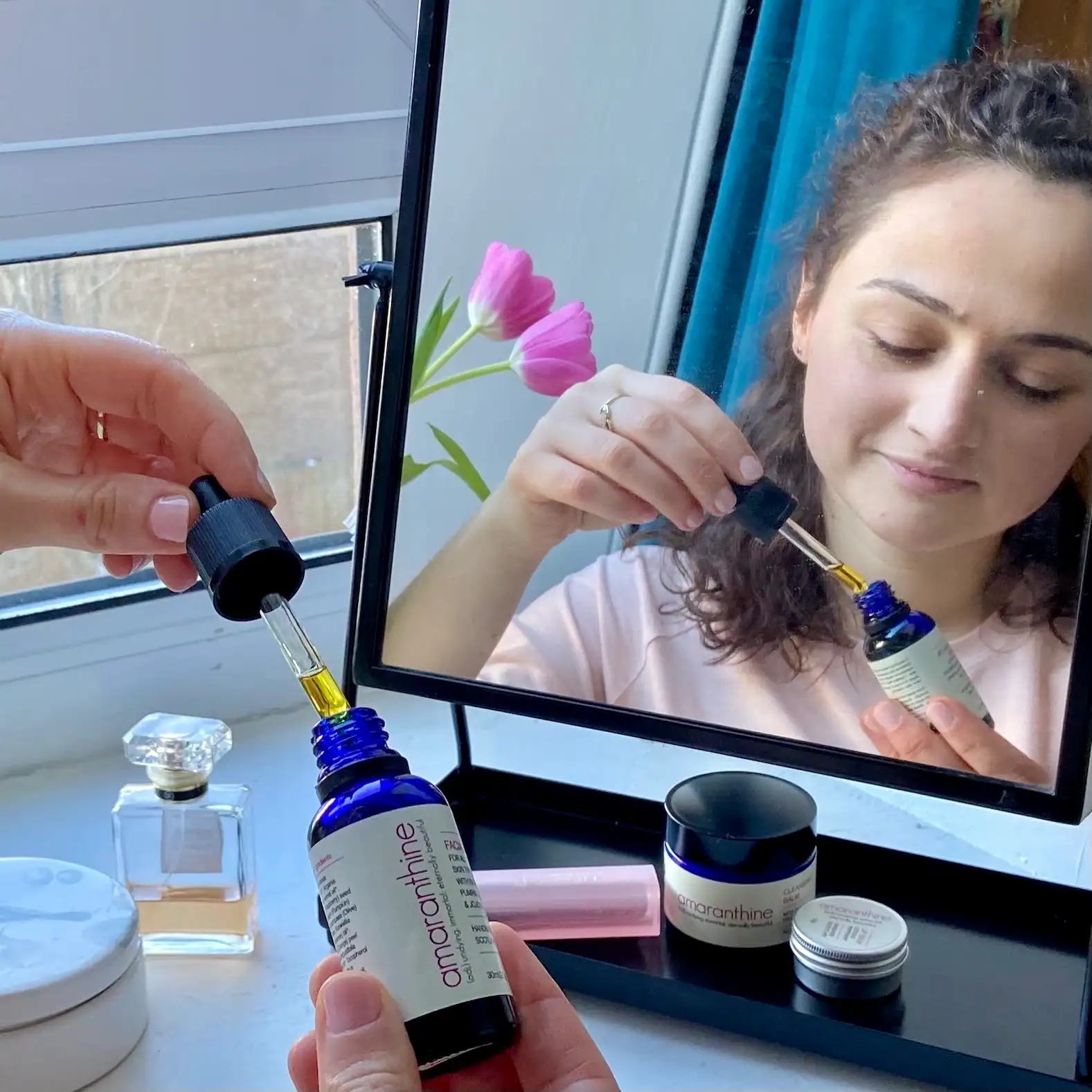
For some people, adding a face oil as the final step in their routine can help lock in moisture and support the skin barrier.
The key is to keep it simple and choose a formula that feels lightweight and comfortable on your skin, rather than heavy or overwhelming.
If you’re curious about how a face oil might fit into your routine, you can explore a gentle face oil designed to support sensitive skin.
This is the part that often gets overlooked.
Skincare isn’t just about ingredients, it’s also about how it makes you feel.
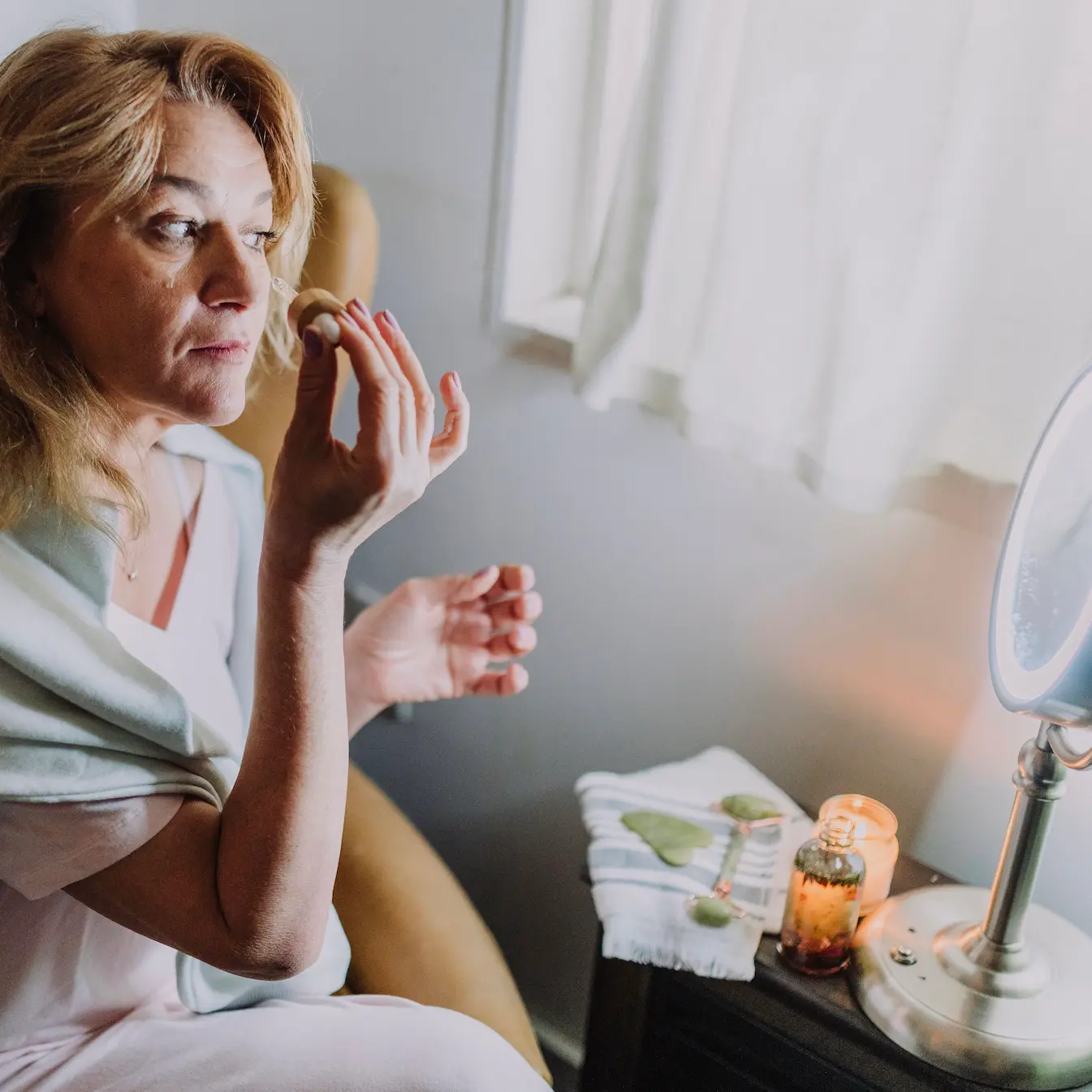
Taking a few minutes to slow down, breathe, and gently massage your products into your skin can help shift your routine from a task into a moment of calm.
A softly scented product, especially one with a balanced aromatherapy blend, can add to this experience when your skin is comfortable with it.
When your skin is reactive, fragrance is often one of the first things people are advised to avoid, and for many, this can be a helpful starting point.
Synthetic fragrance in particular can sometimes feel overwhelming on sensitive skin, and it doesn’t offer the same skin-supportive or aromatherapy benefits.
That said, not all fragranced products are the same. Some people find that well-formulated products using small amounts of skin-friendly essential oils can still feel comfortable on their skin, especially when they are carefully balanced within a gentle formula.
The key is to keep things simple, choose products that feel calm and supportive, and always listen to how your own skin responds.
It’s easy to feel like you need active ingredients to see results, especially with so many trends promising quick changes.
But when your skin is sensitive or reactive, more isn’t always better.
Strong or multiple actives can sometimes overwhelm the skin, especially if your barrier is already compromised. In many cases, focusing on hydration and barrier support will do more for your skin than adding several targeted actives at once.
If you do want to include an active ingredient, it can help to choose something gentler and well-tolerated, and introduce it slowly.
Ingredients like niacinamide, centella asiatica, and panthenol are often used to help support the skin barrier and reduce the appearance of redness. For those looking for a more targeted, age-supportive option, bakuchiol is often chosen as a gentler alternative to traditional retinoids.
What works for someone else may not work for you, and that’s completely normal.
Sensitive skin needs a more intuitive approach. If something feels uncomfortable, even if it’s popular or highly recommended, it’s okay to step back.
Your skin will often tell you what it needs, when you give it the space to do so.
When your skin is reactive, it’s less about finding a “miracle” product, and more about choosing formulas that are thoughtfully balanced.
At Amaranthine, I focus on creating gentle, aromatherapy-infused products that are carefully formulated to support the skin barrier and create a sense of calm, both for your skin and your routine.
If you’re looking to simplify your routine, you can explore the full range of gentle, aromatherapy-infused face care.
Caring for sensitive or reactive skin doesn’t need to feel complicated.
With a simple, supportive routine and a little consistency, your skin can begin to feel calmer, more comfortable, and easier to manage.
Sometimes, the most effective thing you can do is slow down, simplify, and give your skin exactly what it needs, nothing more.
Yes, especially if your skin is prone to reacting. Patch testing allows you to see how your skin responds before applying a product more widely. Try a small amount on an area like behind the ear or along the jawline and leave it for 24 hours. If your skin feels comfortable, you can introduce it slowly into your routine.
It usually takes around 3–4 weeks to see how a product is supporting your skin, particularly when it comes to hydration and barrier repair. However, if a product doesn’t suit your skin, you’ll often notice more quickly, through irritation, redness, or discomfort.
The best routine for sensitive skin is a simple one. Focus on a gentle cleanser, a moisturiser, and optionally a face oil. Keeping your routine consistent and avoiding too many new products at once can help your skin feel calmer and more balanced over time.
Many people with sensitive skin find that a lightweight face oil can help support the skin barrier and lock in moisture. The key is choosing a formula that feels comfortable on your skin and introducing it slowly.


Sarah is the founder of certified palm oil free natural skincare brand Amaranthine. She is a qualified organic skincare formulator and has diplomas in Beauty Therapy and Clinical Aromatherapy.


