

June 12, 2023
•
2 MIN READ
Managing rosacea can be challenging, especially when your skin reacts easily to new products. Choosing the right face mask can make a real difference, particularly if you’re looking for the best way to calm and support rosacea-prone skin. It’s important to focus on gentle formulas that hydrate and soothe, rather than irritate or overwhelm sensitive skin.
In this guide, I’ll explain which ingredients are commonly recommended for rosacea-prone skin, why they’re helpful, and how to choose a face mask that supports sensitive skin without triggering flare-ups.
The best face mask for rosacea is one that soothes and supports the skin barrier without causing irritation. Look for gentle, calming ingredients such as colloidal oatmeal, aloe vera and green tea, and avoid harsh exfoliants or strongly fragranced formulas. A good mask should leave your skin feeling calm, comfortable, and supported, not tight or reactive.
When caring for rosacea-prone skin, it’s generally best to choose face masks made with gentle, anti-inflammatory ingredients. Rosacea is linked to skin inflammation, so calming ingredients can help support the skin barrier and ease visible redness and irritation.

Green tea, including matcha, is valued for its antioxidant and anti-inflammatory properties. Early research suggests that topical green tea extracts may help support skin comfort and reduce the appearance of redness in rosacea-prone skin.
Well recognised for its soothing and moisturising benefits, colloidal oatmeal helps calm irritated skin, relieve itching and supports the skin barrier.
Aloe vera is widely used to soothe and cool sensitive or irritated skin. For rosacea-prone skin, it may help ease feelings of heat, tightness, and discomfort.
Liquorice root is rich in naturally soothing compounds that help calm irritation and reduce visible redness. It’s especially valued for its anti-inflammatory properties, making it a gentle, supportive ingredient for rosacea-prone skin.
Yarrow is traditionally used to soothe irritated skin and is rich in plant compounds that help calm inflammation. It may help reduce redness and support sensitive, rosacea-prone skin as it returns to balance.
Rice starch is often included in sensitive-skin formulas for its calming and skin-protective properties. It can help reduce irritation while supporting a smoother skin feel.
Niacinamide is commonly used to support the skin barrier and improve overall resilience. In low, well-tolerated concentrations, it may help reduce visible redness and sensitivity.
Lavender can offer calming benefits for some skin types, but it isn’t suitable for everyone with rosacea. Those with fragrance sensitivity may prefer fragrance-free formulas, as even natural aromatic ingredients can trigger irritation for some people.

Ingredients such as turmeric, calendula, centella asiatica, witch hazel, and sea buckthorn are also commonly used in formulas designed to support sensitive or redness-prone skin. As with any ingredient, individual tolerance can vary.
Natural ingredients are often chosen for rosacea-prone skin because they tend to be gentle and well tolerated when thoughtfully formulated. Many plant-based ingredients also offer added benefits, such as hydration, antioxidant support, and barrier comfort.
That said, “natural” doesn’t automatically mean suitable for everyone. Some people may still be sensitive to certain natural ingredients, just as others may react to synthetic ones. What matters most is how an ingredient behaves on your skin, and how it’s used within a formula.
If you have sensitive or rosacea-prone skin, it’s always a good idea to patch test new products before applying them to your face.
Including a face mask in your skincare routine can be a helpful way to support rosacea-prone skin, especially during periods of redness, sensitivity, or discomfort. The key is to choose a mask that focuses on gentle hydration and calming ingredients, rather than strong actives or intensive treatments.
Some people find comfort in using masks formulated specifically for rosacea-prone or sensitive skin, as these are typically designed to soothe rather than stimulate.
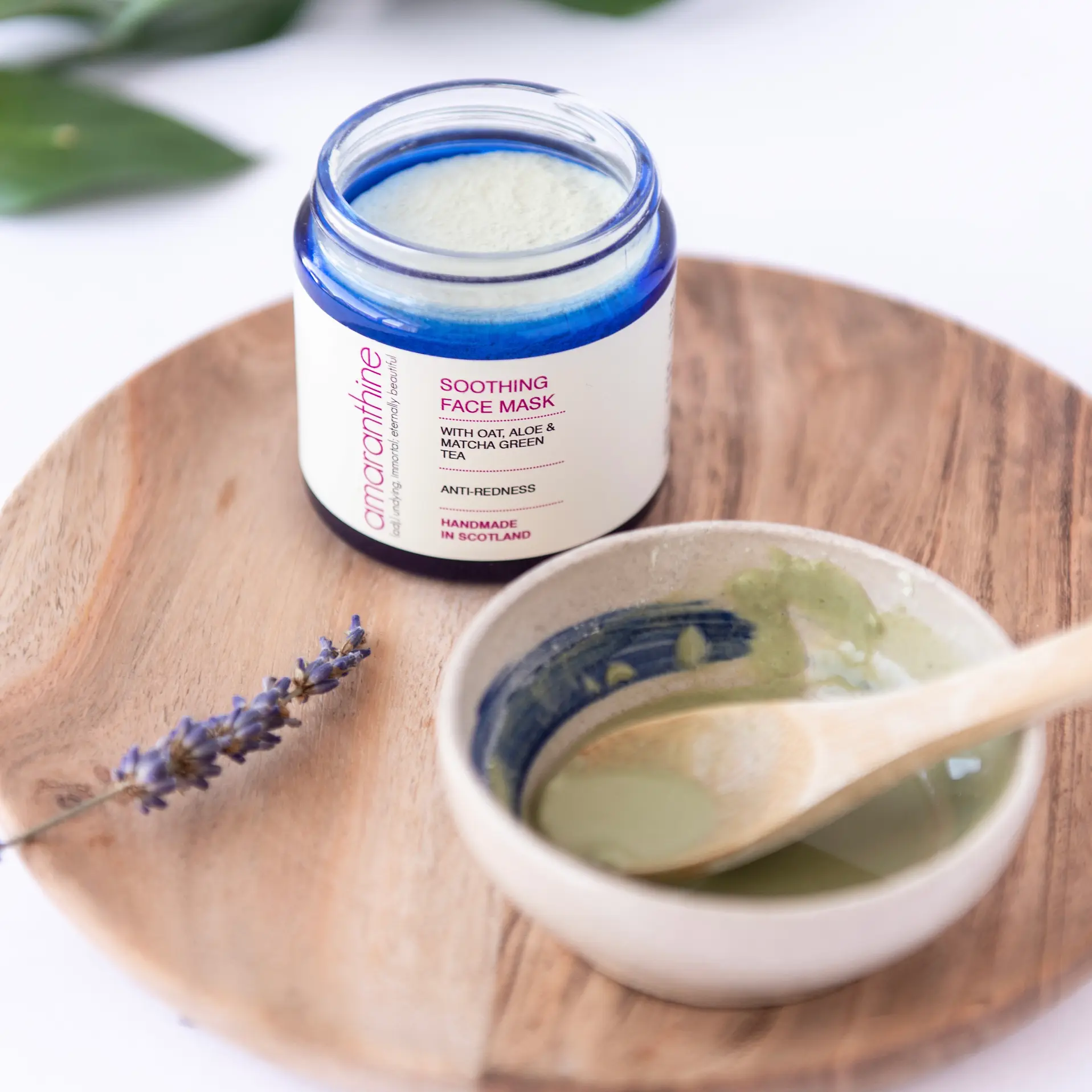
When I created my soothing face mask, my aim was to offer a calm, comforting option for easily reactive skin. It’s made with gentle ingredients such as colloidal oatmeal, aloe vera, niacinamide, and matcha green tea, chosen to help skin feel more settled and supported.
If you’re looking for a face mask designed specifically with rosacea-prone skin in mind, you can explore my soothing face mask.
Used as an occasional ritual, a mask like this can help calm the look of redness and leave skin feeling cooler, more comfortable, and less overwhelmed, without adding unnecessary stress to an already sensitive complexion.
While homemade face masks are often suggested online, rosacea-prone skin can be unpredictable. For this reason, professionally formulated masks with clearly defined ingredients are usually the safer option.
How to manage rosacea flare ups
Best cleanser for rosacea: what to look for and what to avoid
Rosacea skincare: Incorporating face oils into your rosacea skincare routine
Recent Advances in the Management of Rosacea through Natural Compounds Link


Sarah is the founder of certified palm oil free natural skincare brand Amaranthine. She is a qualified organic skincare formulator and has diplomas in Beauty Therapy and Clinical Aromatherapy.


