

September 17, 2024
•
6 MIN READ
Natural skincare has grown quickly over the past decade, but with that growth comes an important question: is natural skincare actually better for your skin and the planet? As more people pay closer attention to what they put on their skin and where it comes from, curiosity has shifted from trends to trust.
Does natural skincare really support skin health? Is it more sustainable? And how can you tell the difference between thoughtful formulation and clever marketing?
As a natural skincare formulator, I see natural skincare as most beneficial when it’s created with care, transparency, and respect for both skin and planet. This article explores what natural skincare truly means, where it works well, where it can fall short, and how to make informed choices that support long-term skin health and your values.
Natural skincare generally refers to products made with plant-based and naturally derived ingredients, offering an alternative to more conventional formulations that rely heavily on synthetic components. These ingredients are often chosen for their skin-supportive properties and their ability to work in harmony with the skin’s natural processes.
However, the term natural isn’t strictly regulated, which means it can be used in different ways by different brands. Some focus on formulations made entirely from unrefined or minimally processed ingredients, such as cold-pressed oils and botanical extracts. Others may combine natural ingredients with gentle, carefully selected processed components to improve stability or performance.
This is where transparency matters. Greenwashing, where products are marketed as natural despite containing only a small amount of plant-based ingredients alongside synthetic fillers, is still common. Taking time to read ingredient lists and understand a brand’s values can help you make more informed choices that truly align with your skin and sustainability priorities.
Natural skincare works best when it draws on the natural complexity of plant-based ingredients. Oils, extracts, and botanicals contain a wide range of beneficial compounds, including omega fatty acids, vitamins, and antioxidants, which support the skin in multiple ways at once.
When thoughtfully formulated, these ingredients can:
Rather than acting in isolation, many natural compounds work together in synergy, supporting the skin barrier and its natural repair processes. This layered, balanced approach is difficult to replicate with single isolated ingredients, which is why well-formulated natural skincare can be so effective for maintaining healthy, resilient skin over time.
Synthetic ingredients are often designed to replicate specific functions found in nature, such as hydration or antioxidant support. While these ingredients can be effective, they usually focus on isolated compounds rather than the broader, more complex profiles found in plant-based ingredients.
Many natural ingredients, including botanical oils and extracts, contain a wide range of compounds that work together to support the skin. This natural synergy can help deliver more rounded skin support, particularly when it comes to nourishing the skin barrier and maintaining long-term skin comfort.
That said, natural skincare isn’t automatically suitable for everyone. Some people may be sensitive or allergic to certain plant-based ingredients, including essential oils or botanical extracts. For sensitive or reactive skin, choosing products with simple, well-considered formulations and patch testing new products is always the most supportive approach.
The phrase “chemical-free” is often used in skincare marketing, but it isn’t scientifically accurate. Everything, whether natural or synthetic, is made up of chemicals, including water and plant oils.
In most cases, brands use this term to suggest their products avoid certain harsh or undesirable ingredients. While the intention may be to reassure, the wording itself can be misleading. A more helpful approach is to look beyond marketing claims and focus on ingredient lists, formulation choices, and how products are designed to support the skin.
When thoughtfully formulated, natural skincare can be a more sustainable choice for both skin and planet. Many plant-based ingredients are biodegradable, meaning they break down naturally without lingering in the environment or contributing to long-term pollution.
Sustainable natural skincare brands often prioritise responsible ingredient sourcing, small-batch production, and lower-impact packaging. These practices can help reduce waste, limit overproduction, and support a more mindful approach to skincare that aligns with environmental values.
However, natural skincare isn’t automatically sustainable. Ingredients such as palm oil are widely used in skincare and, when poorly sourced, are linked to deforestation and habitat loss. Likewise, over-harvesting botanicals like sandalwood or rosewood can place pressure on fragile ecosystems. Understanding how ingredients are sourced, including whether palm oil is used and how it’s certified or avoided, is an important part of choosing truly sustainable natural skincare. Choosing brands that are transparent about sourcing and sustainability commitments helps ensure your skincare routine supports the planet in practice, not just in name.
Choosing natural skincare often means supporting small, independent skincare brands. These businesses typically create products in small batches, allowing for greater care, freshness, and attention to detail throughout the formulation process.
Indie skincare brands are often more transparent about their ingredient choices, sourcing practices, and values. Many work closely with trusted suppliers, local producers, or fair-trade partners, helping to support more sustainable and ethical supply chains.
By choosing to shop small, you’re supporting brands that prioritise craftsmanship, sustainability, and integrity over mass production. There’s also a more personal connection, many independent skincare brands are founder-led, with real stories, values, and care behind every product, turning everyday skincare into something more meaningful.
Natural skincare is often less about quick fixes and more about supporting the skin over time. By using nutrient-rich, plant-based ingredients, you’re working with the skin’s natural functions rather than trying to override them, helping to support balance, resilience, and long-term skin health.
Many natural skincare products also incorporate aromatherapy, bringing a sensory element into your routine. These moments of scent and touch can help turn everyday skincare into a calming ritual, supporting emotional wellbeing as well as the skin itself.
When approached thoughtfully, natural skincare can benefit your skin, the environment, and the small, ethical businesses behind the products. It’s a slower, more considered way of caring for your skin, one that values wellbeing and sustainability alongside results.
Natural skincare isn’t about perfection or labels, it’s about intention. When thoughtfully formulated and responsibly sourced, natural skincare can support skin health, respect the environment, and encourage more mindful choices about what we use every day.
Understanding ingredients, questioning marketing claims, and choosing brands that value transparency can help you find skincare that truly aligns with your skin and your values. Whether you’re new to natural skincare or refining your routine, taking a considered approach allows your skincare to work with you, not against you.
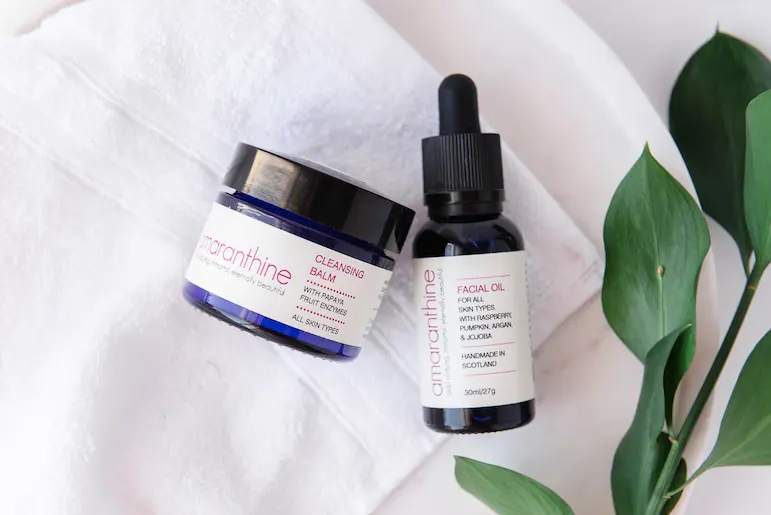
Amaranthine is a Scottish natural skincare brand founded on a belief in thoughtful formulation, transparency, and sustainability. Each product is handcrafted in small batches using carefully chosen ingredients, with a focus on supporting skin health while respecting the environment.
All Amaranthine skincare is certified cruelty-free and proudly palm oil-free, reflecting a commitment to responsible sourcing and ethical production. This approach underpins how Amaranthine products are formulated and made.
Practical Uses of Botanicals in Skin Care
Modern cosmetics, Ingredients of Natural Origin - a scientific view, volume 1
Aromatherapy Scotland Clinical Aromatherapy Diploma course notes


Sarah is the founder of certified palm oil free natural skincare brand Amaranthine. She is a qualified organic skincare formulator and has diplomas in Beauty Therapy and Clinical Aromatherapy.


