

December 12, 2025
•
5 MIN READ

There’s something wonderfully grounding about sinking into warm water at the end of a long day. Add a thoughtfully blended aromatherapy bath oil and it becomes more than a soak, it becomes a little sanctuary.
But not all bath oils behave in the same way. Used correctly, a natural bath oil can soften dry skin, calm the senses and support emotional wellbeing. Used incorrectly, it may cause irritation or leave the bath more slippery than expected.
Understanding bath oil safety helps you enjoy all the benefits with confidence.
When I first began researching bath oils, I was surprised by how many, even from well-known brands, didn’t include an emulsifier. This meant they didn’t blend properly into the water, which didn’t feel safe or particularly enjoyable to use.
I wanted to create a natural bath oil that felt gentle, comfortable and easy to trust, something that would support a calm, restorative bath without the downsides.
That intention shaped every part of the formula.
Aromatherapy bath oils contain essential oils diluted in a carrier oil. However, unless the formula contains an emulsifier, once added to water, the oil cannot mix properly.
Instead, it can separate into small pools containing concentrated essential oils. These may cling to the skin and the sides of the bath.
Because essential oils are powerful plant extracts, this lack of dispersion can increase the risk of irritation, particularly for sensitive or dry skin. It can also leave the bath more slippery than expected, which takes away from what should be a calm, comfortable experience.
This is why formulation matters so much.
A “blooming” bath oil contains an emulsifier, an ingredient that allows oil and water to blend.
As the bath oil meets warm water, it transforms into a soft, milky fluid that disperses evenly throughout the bath. This even blending helps prevent concentrated oil from sitting on the surface.
This creates two essential safety benefits:
Your skin comes into contact with gently diluted essential oils, rather than concentrated droplets.
Because the oil blends into the water, there’s less residue left on the surface of the bath.
It’s a small formulation detail, but it makes a noticeable difference to both comfort and safety.
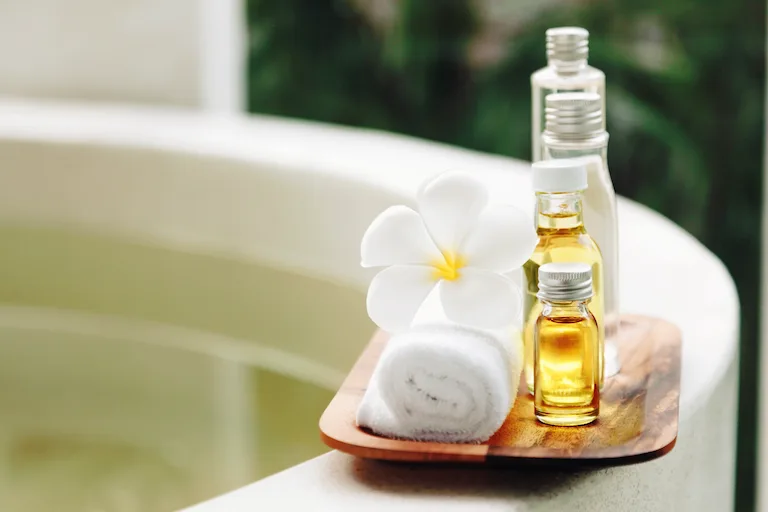
Once properly dispersed in water, essential oils can work more gently alongside the skin.
A well-formulated bath oil can help soften dryness, ease feelings of tightness and support moisture levels, making it a supportive choice for dry or sensitive skin.
When the oil blends evenly, the water feels soft and silky rather than oily. This allows the skin to benefit from the bath without concentrated patches sitting on the surface.
When used correctly in the bath, essential oils are released into the warm air as steam rises.
These aromatic molecules are inhaled and processed by the limbic system, the part of the brain linked to mood and emotion. This is why certain scents are often associated with a sense of calm.
A well-balanced aromatherapy blend can gently support relaxation, helping the body and mind begin to unwind. It’s a subtle effect, but one that contributes to the overall experience of the bath.
To enjoy your bath oil comfortably:
Avoid using bath oils on broken or very irritated skin, as essential oils may cause discomfort.
A warm bath can offer a simple pause in a busy day, a place to breathe, slow down and reset.
When your bath oil is thoughtfully formulated, that moment feels easier and more comfortable to enjoy. It becomes less about getting it right, and more about allowing yourself to switch off for a while.
If you’d like to explore a bath oil designed with this in mind, you can discover my aromatherapy bath oil here.


Sarah is the founder of certified palm oil free natural skincare brand Amaranthine. She is a qualified organic skincare formulator and has diplomas in Beauty Therapy and Clinical Aromatherapy.


